Why India’s Rupee Weakness Is a Five-Channel Risk to the Economy

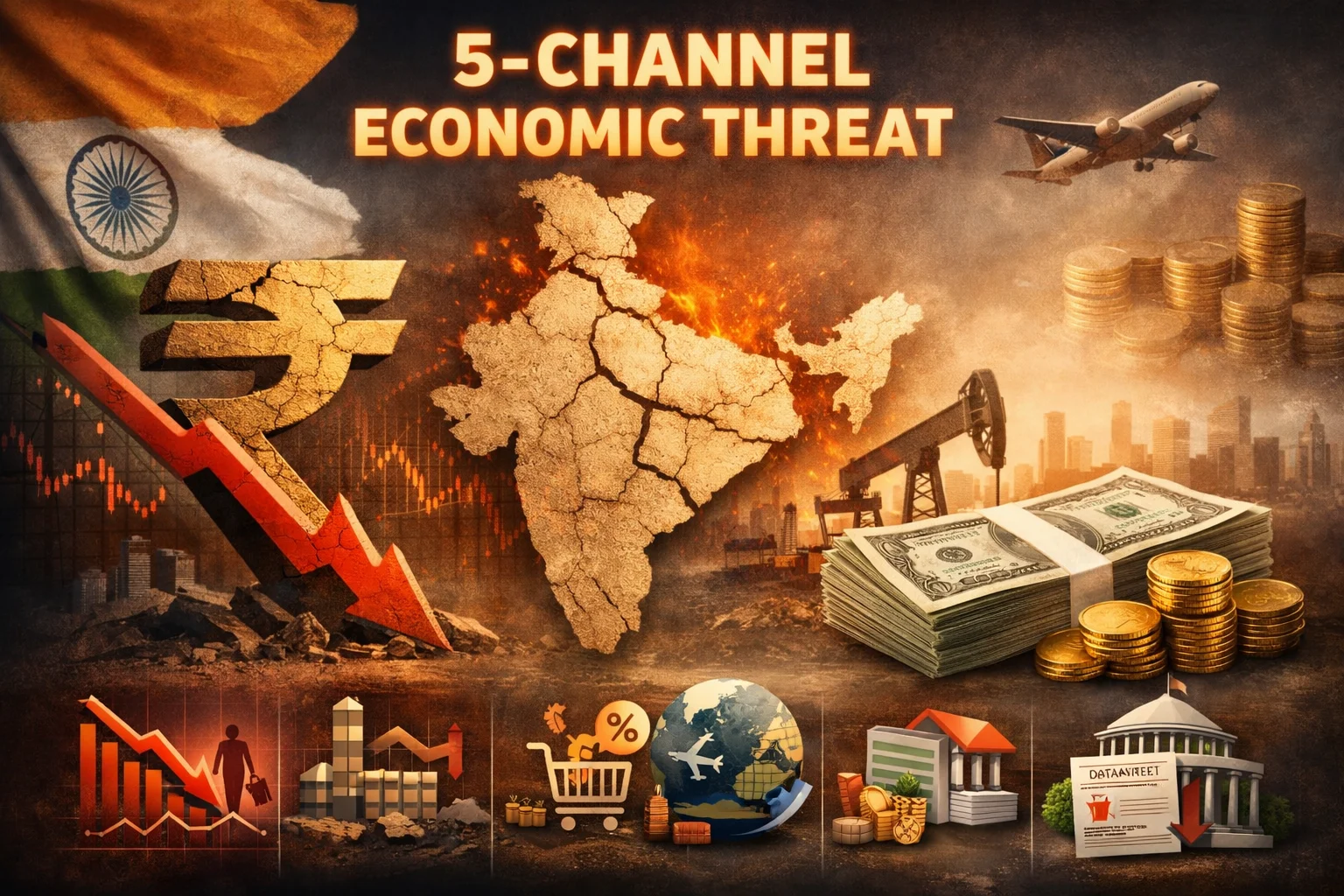
Hello everyone. If you've been following the financial news, you'll know the Indian rupee has been on a persistent slide against the US dollar. While currency fluctuations are normal, the current weakness is ringing alarm bells for a deeper reason. A recent analysis from Bank of America has issued a stark warning: India's economy now faces a "five-channel threat" from a depreciating rupee.
Let's unpack what this means and why it's so concerning. You see, the old economic playbook on this is now dangerously outdated.
The Outdated Playbook: "Weak Rupee = Export Boost"
Conventionally, a weaker rupee was seen as a net positive for an economy like India’s. The logic was straightforward:
Cheaper Exports: Indian goods become more affordable on the global market.
Increased Competitiveness: This boosts export volumes, brings in more dollars, and ultimately supports GDP growth. It was a simple, almost mechanical, benefit.
The New Reality: A More Complex and Vulnerable Economy
Today, that simplistic equation no longer holds. India’s economic structure has fundamentally changed, turning a currency fall into a multi-dimensional risk.
The Import-Export Tangle: India is no longer just an exporter of raw or finished goods; it's deeply integrated into assembly. Think smartphones, electronics, and machinery. We may export the final product, but a significant portion of the high-value components are imported. A weak rupee makes these imports more expensive, eroding the profit margins from exports. The supposed export benefit is often neutralized—or worse, overtaken—by soaring import costs.
Capital Flows Rule the Game: More critically, India's economy is now more driven by capital flows (foreign investments) than just trade flows. A sliding rupee is a red flag for global investors. It signals economic stress and external vulnerability, which can trigger capital flight. This impacts stock and bond markets, increases volatility, and makes companies hesitant to invest. Sentiment, as they say, is everything.
Bank of America's "Five-Channel Threat": How Weakness Spreads
The analysts warn that rupee depreciation doesn't hit just one area; it transmits stress through five interconnected channels, creating a cascading effect:
1. The Sentiment & Confidence Channel
A falling rupee shakes the confidence of foreign portfolio investors (FPIs) and multinational corporations. It can lead to capital outflows, stock market volatility, and a "wait-and-see" approach from businesses, freezing crucial long-term investments.
2. The Growth Channel
The old export-led growth boost is minimal now. With high import content, export gains are muted. Meanwhile, rising import costs inflate production expenses for domestic industries, forcing them to cut output, margins, and expansion plans. This dampens both export and domestic growth.
3. The Inflation Channel
This is the most direct hit for the common citizen. A weaker rupee makes all imported goods costlier—crude oil, fertilizers, edible oils, electronics. Even if global commodity prices fall, a weak rupee can negate that relief. This complicates the Reserve Bank of India's (RBI) fight against inflation, potentially forcing it to delay or reverse interest rate cuts.
4. The External Balance & Capital Flow Channel
Here's the paradox. While a weak rupee should theoretically improve the trade deficit (by making exports cheaper and imports dearer), it worsens the capital account. It triggers foreign investor pullouts and makes it more expensive for Indian companies to service their foreign currency debt. Since India runs a structural current account deficit that needs to be financed by foreign capital, a slowdown in these inflows creates a dangerous squeeze.
5. The Fiscal Channel
Finally, the government's budget comes under severe pressure. Subsidy bills for fuel, fertilizer, and food soar as import costs rise. Simultaneously, the RBI's ability to transfer surplus dividends to the government shrinks as it spends foreign reserves to defend the rupee. The result? Rising expenditures and constrained revenues, which widens the fiscal deficit and limits the government's ability to spend on growth projects.
The RBI's Tightrope Walk
Faced with this, the RBI is in a bind—a classic "between a rock and a hard place" scenario.
Intervene Aggressively: Sell dollars to prop up the rupee, but risk depleting precious foreign exchange reserves.
Stay Hands-Off: Let the rupee find its market level, but risk runaway inflation and a panic-driven capital exodus.
Currently, the RBI is walking this tightrope by managed intervention—selling dollars strategically to prevent chaotic declines without exhausting its reserves.
The Bottom Line: A Structural, Not Cyclical, Challenge
The key takeaway is that this isn't a temporary blip. As Bank of America highlights, India's economy is now capital-flow driven, making it structurally more sensitive to currency volatility than in the past. The weakening rupee is a symptom of interconnected vulnerabilities—in sentiment, growth, inflation, external balance, and public finances.
While predictions vary, the structural pressure suggests the rupee's long-term trajectory could see further depreciation. The critical question isn't just where the rupee will land, but how well India's policymakers can navigate this complex five-channel storm brewing beneath the surface.