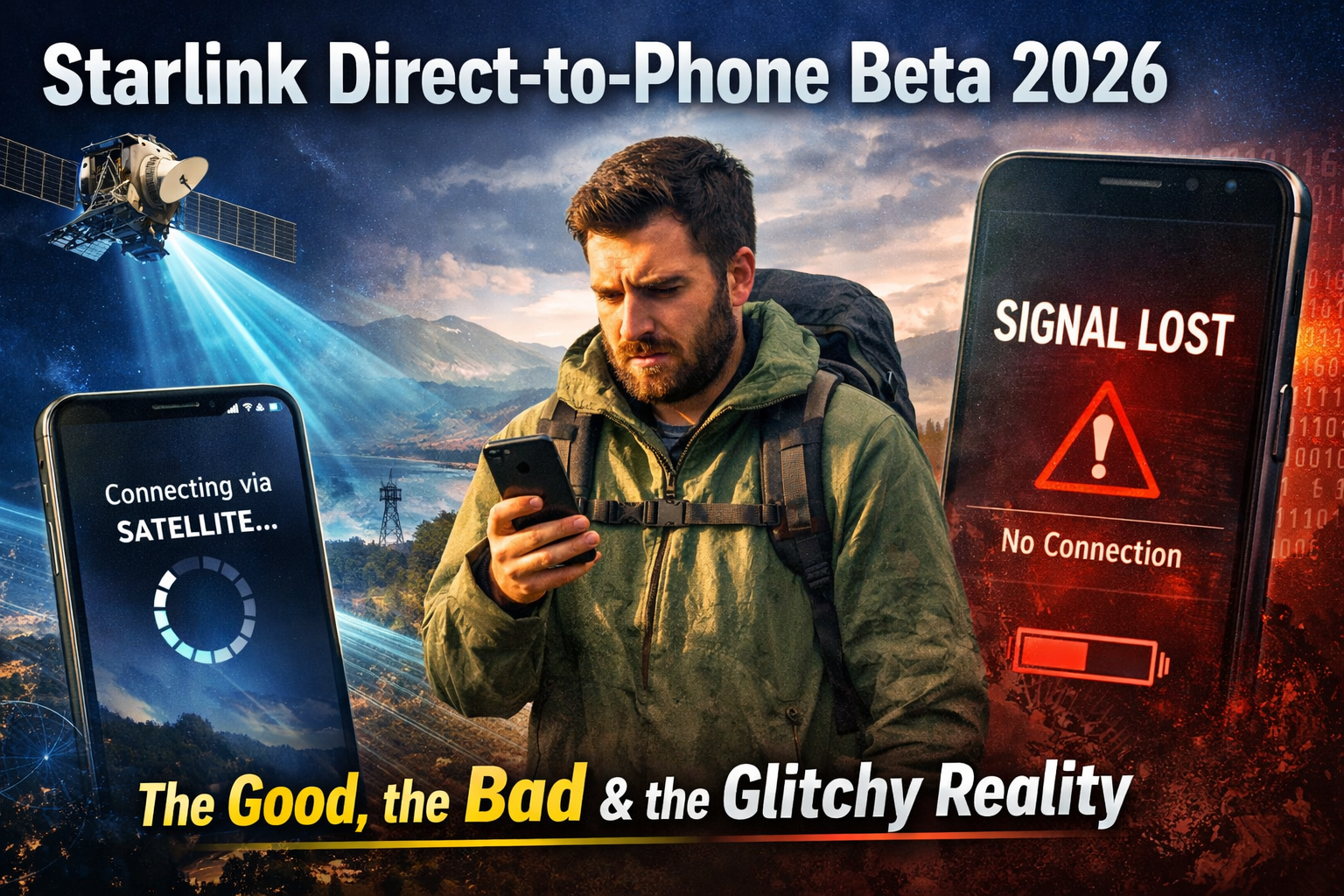
Starlink Direct-to-Phone in 2026: Reality Check on a Satellite Revolution That Still Stumbles in the Wild

The Promise vs. Reality Gap
In the wireless industry, few promises created as much anticipation as SpaceX’s Starlink Direct-to-Phone service. The idea felt groundbreaking: a satellite network capable of delivering text communication to everyday smartphones without special antennas, opening coverage in remote deserts, deep forests, and rural pockets where traditional carriers fail. For millions who routinely lose signal during travel, outdoor work, or natural disasters, the technology looked like a once-in-a-generation upgrade to mobile connectivity.
Yet, as the field tests expanded across 2025 and into early 2026, a more complicated truth emerged. The beta phase, launched in partnership with T-Mobile in the United States and various pilot carriers abroad, is revealing a split personality—impressive in controlled scenarios, maddening in real-world conditions, and nowhere near ready to replace terrestrial networks. Testers report inconsistent handoffs, long reconnection delays, aggressive battery drain, and regulatory limitations that still restrict Starlink to text-only functionality.
This deep-dive consolidates early 2026 findings from multiple regions, adds updated technical insights, and examines whether Starlink’s smartphone-to-satellite model is truly on the brink of a communications breakthrough or still stuck in a messy infancy.
Unstable Connections: When Starlink Works… Then Suddenly Doesn’t
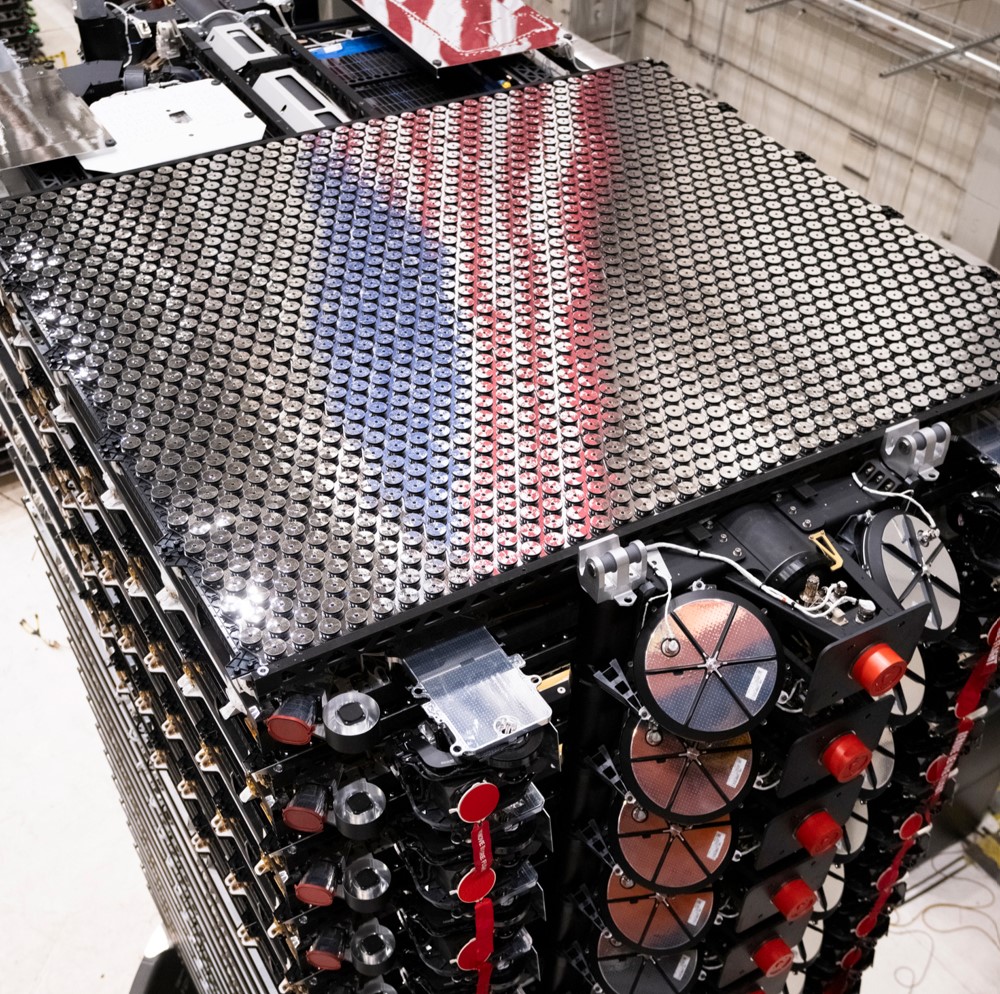
A consistent pattern emerges across user reports: Starlink Direct-to-Phone can connect quickly when a satellite passes overhead, but the link rarely stays stable for long. The system depends on Gen2 Starlink satellites, equipped with LTE Band 25 payloads, and this creates coverage gaps depending on orbital position.
Beta testers hiking remote trails or camping in non-service zones reported moments of excitement when an alert popped up showing “Satellite Connectivity Available.” That excitement faded quickly. Users repeatedly describe the same experience: a burst of service that vanishes within minutes, followed by long stretches of dead silence while waiting for the next satellite pass.
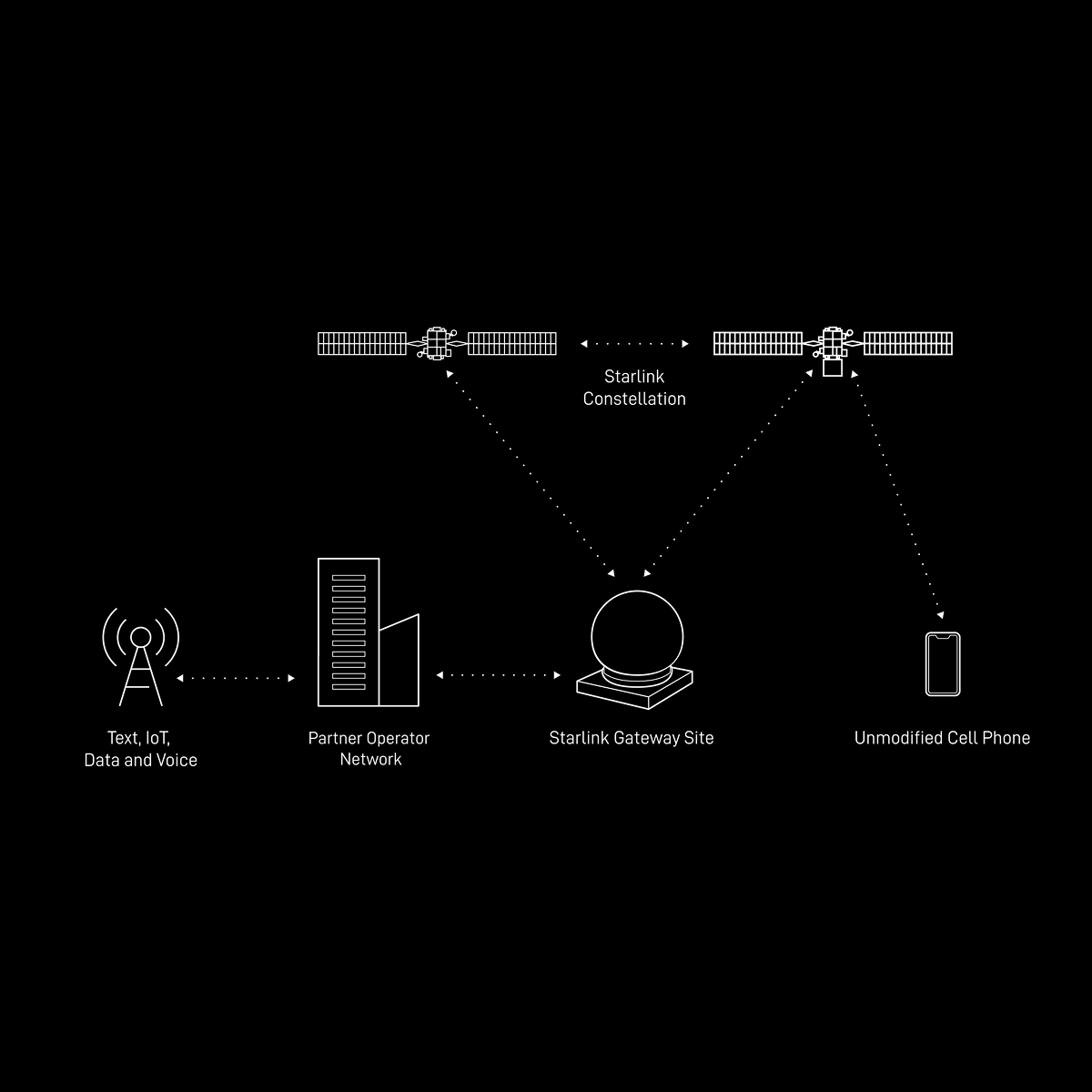
One early tester from the Midwest put it bluntly during field evaluations near Cincinnati. After locking onto a Starlink signal, he waited four to five minutes for a simple message to send. Some texts delivered; others simply disappeared. In rural Alabama, a Samsung S24 Ultra user called the experience “very underwhelming,” noting frequent drops even when the timing of satellite passes suggested stable windows.
Also Read: How India Stacks Up: Global Hypersonic Competition
Part of the problem lies in how smartphones treat satellite service. Phones prioritize even the weakest terrestrial towers, abandoning satellite connectivity mid-send. This leads to chaotic handoffs, especially around fringe coverage areas.
Movement makes it worse. Driving, walking under tree cover, or even being inside a car often breaks the link.
Battery Drain: A Major Early Drawback of Direct-to-Phone Connectivity
Battery consumption remains one of the most frequent user complaints. Searching for satellites forces the device’s radios to work overtime. On many phones, the constant cycle of terrestrial scans, satellite handshakes, and reconnection attempts leads to significant power drain.
In New Mexico, a tester noted that morning connectivity at his cabin looked promising, but as satellite angles shifted later in the day, the phone burned through battery rapidly while hunting for service.
Compared to Apple’s Globalstar emergency messaging, Starlink’s approach feels raw and unfinished. Until constellation density and software logic improve, this will remain a major limitation.
User Frustrations Highlight Widespread Beta Limitations
Reddit communities tracking T-Mobile’s satellite texting pilots reveal a rising number of complaints. Three core issues appear repeatedly:
• Phones switch to Starlink even with usable terrestrial coverage
• Satellite links drop randomly and often
• Weak rural signals cause endless toggling between networks
Newer iOS builds show minor improvements, but Android remains unpredictable. The experience can vary dramatically between devices, regions, and even users standing in the same location.
Also Read: A Rare Visitor from Another Star System: Comet 3I/ATLAS
Technical Barriers and Regulatory Restrictions Slow Down Deployment
The biggest bottleneck is regulatory. Today, Starlink cannot exceed strict FCC power limits for these tests, which limits reach and stability. This is why, in its current form, Starlink Direct-to-Phone only supports text messages.
Global challenges are similar. Japan’s telecom regulators are cautious, and India’s 2025–26 pilot programs face the same stability concerns as U.S. trials.
SpaceX continues launching Band 25-capable Gen2 Mini satellites, but improvements will be gradual until constellation density increases significantly.
The Future Outlook: Huge Potential, But Not There Yet
Despite current issues, optimism remains strong. Many testers believe this is just the early rough stage of a transformational technology. As more satellites are launched, and as firmware updates refine network selection, stability should increase dramatically.
Space-industry analysts expect a major performance jump once the constellation reaches its planned density. Starlink’s roadmap includes:
• Low-bandwidth satellite data
• Narrowband voice calling
• Emergency navigation enhancements
But for now, the service remains limited to short text bursts in ideal open-sky conditions.
Global carriers, especially in rural regions of Africa and Asia, are watching closely. India stands to benefit enormously once the system stabilizes.
2026: A Transitional Year for Satellite-to-Smartphone Connectivity
This year marks the shift from ambitious promise to early reality. The technology clearly works, but only under the right conditions. It excels in absolute dead zones—remote deserts, mountain valleys, rural highways. It fails in fringe zones where terrestrial and satellite signals interfere.
Terrain, movement, battery behavior, software priorities, and satellite coverage all shape performance. The next twelve months will determine whether Starlink can overcome these early-stage limitations.
Final Verdict: Extraordinary Potential Wrapped in an Unstable Beta
In its current form, Starlink Direct-to-Phone is a breakthrough technology that still behaves like an experiment. It can provide emergency lifelines where no other network exists, but it is too inconsistent for daily use.
The most accurate user sentiment is this: “This is likely the worst it will ever be.”
As constellation density improves, regulatory limits loosen, and carriers optimize integration, Starlink could evolve into a mainstream connectivity layer. But for now, the service remains a mixture of brilliant moments and frustrating failures.
The future is bright, but today’s experience requires patience, clear skies, and realistic expectations.
————————————————————————————————————