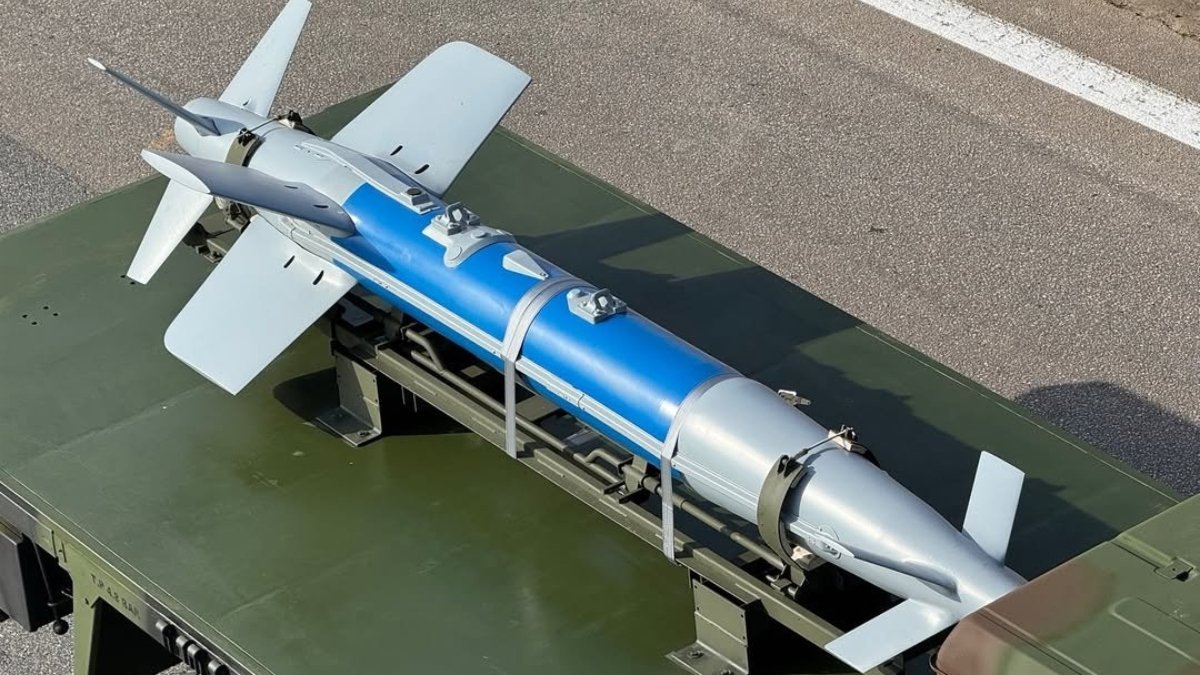
SPICE‑1000: The Silent Precision Weapon India Is Rapidly Inducting

India’s air warfare doctrine is undergoing a decisive shift. Imagine an enemy sitting deep inside their most secure airbase, surrounded by radar networks, missile shields and electronic surveillance. Suddenly, a strike hits their key asset yet the radar shows nothing, GPS is jammed, and the attacking aircraft never even crossed the border.
This scenario is no longer hypothetical. It reflects the growing relevance of a new generation of stand‑off precision weapons, and one of the most important among them is SPICE‑1000, a system the Indian Air Force (IAF) is quietly but rapidly inducting.
This is not merely another bomb. It represents the future of air combat.
What SPICE‑1000 Really Is
Despite frequent misconceptions, SPICE‑1000 is not a missile. It is a smart guidance kit that converts a conventional 1,000‑pound bomb into a stand‑off precision strike weapon.
Developed by Rafael Advanced Defense Systems of Israel, SPICE stands for Smart, Precise Impact, Cost‑Effective a name that captures the core philosophy behind the system.
SPICE‑1000 gives an ordinary bomb “eyes and brain,” allowing it to glide long distances, search for a target, recognise it using pre‑loaded imagery, and strike with extreme accuracy.
Also Read: AayulSAT Aims to Pioneer On‑Orbit Refuelling
Range and Capabilities
SPICE‑1000 has an operational range of 100–125 km, enabling fighter aircraft to launch attacks without entering enemy air‑defence zones. Once released, the bomb deploys its wings, glides toward the target, and autonomously adjusts its path.
This long range offers a significant advantage. Indian fighters operating from within Indian airspace whether over Kashmir, Ladakh or Rajasthan can still hit strategic assets deep inside hostile territory.
Why It’s Called a “Silent Killer”
Unlike weapons that rely solely on GPS, SPICE‑1000 uses a dual‑mode guidance system:
• EO (Electro‑Optical) camera for daytime targeting
• IR (Infrared) sensor for night operations
• Scene‑matching AI to compare live visuals with stored satellite images
This is the key feature. Even if GPS is jammed, the bomb compares real‑time visuals with the pre‑loaded target images. If an enemy changes positions slightly, the AI adjusts the trajectory automatically.
This makes SPICE‑1000 a fire‑and‑forget weapon. Once released, the aircraft can disengage immediately, while the weapon completes the mission autonomously.
Also Read: DRDO Scramjet Breakthrough: India's 12-Minute Hypersonic Test
How the Strike Workflow Operates
Mission planners preload satellite or drone imagery of the target bunkers, command shelters, runways, fuel depots.
The fighter jet releases the bomb from a safe distance.
The EO/IR seeker activates, scanning the terrain.
On approach, the bomb matches visuals with stored images.
AI algorithms confirm the target and align precisely.
Even in GPS‑denied environments, the bomb strikes with high accuracy.
This combination autonomy, scene matching and long-range gliding is what makes SPICE‑1000 a credible threat to hardened, well-defended infrastructure.
Why India Is Buying SPICE‑1000 When DRDO Has Gaurav
A natural question emerges:
India already has DRDO’s Gaurav glide bomb, so why buy an expensive Israeli system?
The answer lies in combat readiness.
• SPICE‑1000 is combat‑proven and fully operational today.
• Gaurav, while promising and indigenous, is still moving toward large‑scale induction.
• Air forces do not rely on experimental systems during high‑risk missions.
This is why the Defence Acquisition Council approved 1,000 SPICE‑1000 kits, ensuring the IAF has immediate, deployable, stand‑off strike capability.
Remembering Balakot: India Has Used SPICE Before
India’s first major employment of the SPICE family came during the Balakot airstrike in 2019, where SPICE‑2000 bombs were used.
The impact was clear:
• Zero pilot loss
• Global strategic attention
• Political and military leverage
SPICE‑1000 builds on that legacy.
Where SPICE‑2000 is heavier but shorter‑ranged, SPICE‑1000 is lighter with nearly double the range ideal for deeper penetration without crossing hostile airspace.
Why SPICE‑1000 Is a Game‑Changer for the IAF
The system strengthens India’s position against both Pakistan and China:
• Safe-distance strikes without entering enemy air defences
• First-night, first-strike capability in a conflict
• Ability to target multiple assets bunkers, hardened shelters, airfields
• Effective in GPS‑jammed environments
• Low-risk missions because aircraft do not need to fly close
In short, it gives India a strategic advantage where modern warfare increasingly depends on precision, stand‑off capability and survivability.
The Numbers That Terrify the Enemy
• Weight: approx. 500 kg
• Range: 100–125 km
• Role: destroy airbase shelters, command bunkers, ammo depots
• Mode: autonomous fire-and-forget
• Accuracy: scene-matching precision
These capabilities make SPICE‑1000 a credible deterrent.
A single strike can disable critical infrastructure and disrupt enemy air operations within minutes.
Final Analysis
SPICE‑1000 is not just a weapon. It is a signal — that India is now prioritising distance, precision and survivability in air warfare. Radar shields, hardened shelters, GPS jamming, and electronic warfare offer little protection against a system designed to think and strike autonomously.
As India expands its modern precision inventory, a key question emerges:
Will SPICE‑1000 reshape the air power balance in South Asia?
That debate is now underway.