AayulSAT Aims to Pioneer On‑Orbit Refuelling

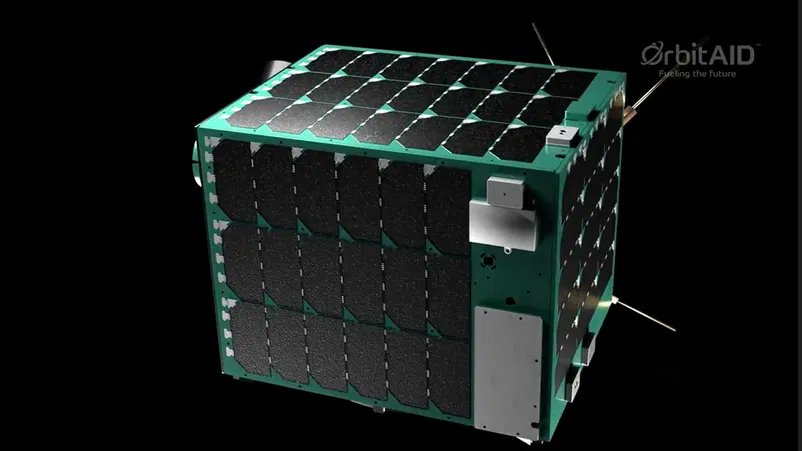
Among the payloads aboard PSLV‑C62 was AayulSAT, developed by Chennai‑based space technology startup OrbitAID Aerospace. The 25‑kilogram satellite is billed as India’s first on‑orbit satellite refuelling technology demonstrator, tasked with testing the transfer of propellant, power and data in low Earth orbit capabilities that could one day help extend the operational lives of spacecraft and reduce space debris.
OrbitAID’s mission is built around a proprietary docking and transfer interface, the Standard Interface for Docking and Refuelling Port (SIDRP). By demonstrating fuel flow and connectivity in a microgravity environment, AayulSAT is intended to pave the way for future commercial services where satellites could be routinely serviced or refuelled in space.
“The goal is to test propellant, power and data transfer in orbit and to mature the technology for future commercial services,” said company executives in prior interviews. The startup has described the initiative as foundational for building an “on‑orbit economy.”
Payload Spread Highlights Emerging Space Capabilities
In addition to AayulSAT and EOS‑N1, PSLV‑C62 was reported to carry a diverse assortment of payloads. These include technology and research satellites from Indian academic institutions and commercial entities, along with international experimental payloads.
One notable secondary mission involves satellites such as MOI‑1, developed by Hyderabad‑based startups TakeMe2Space and Eon Space Labs, which is intended as an orbital image‑processing laboratory leveraging artificial intelligence a concept likened in media coverage to a “space cybercafe.”
Also Read: 3I/ATLAS: Latest Updates on the Interstellar Visitor Traversing Our Solar System
Another is Spain’s KID re‑entry capsule, a technology demonstrator for controlled atmospheric re‑entry operations designed to separate from the PSLV’s fourth stage and splash down in the South Pacific.
Anomaly Emerges in Flight; Orbit Injection Affected
Shortly after liftoff, however, mission controllers observed an anomaly during the third stage of flight, leading to a deviation from the planned trajectory. Indian Space Research Organisation (ISRO) officials later confirmed that the vehicle did not achieve the velocity and orbital insertion required to place its satellites into their intended sun‑synchronous orbit.
Preliminary data indicate that the third stage underperformed due to a drop in propulsion efficiency, causing the rocket to veer off course. As a result, the satellites including EOS‑N1, AayulSAT and others onboard could not be deployed into their operational orbits. ISRO said telemetry analysis is underway to determine the precise cause.
Also Read: 3I/ATLAS: Latest Updates on the Interstellar Visitor Traversing Our Solar System
Today’s setback follows an earlier PSLV anomaly in May 2025, when PSLV‑C61 failed to place the EOS‑09 satellite into orbit due to a third‑stage issue. While the PSLV family has a long history of reliable service, consecutive anomalies have drawn scrutiny and intensified focus on quality assurance processes in launch operations.
Impact on India’s Satellite Servicing Ambitions
The unsuccessful orbit injection is a blow to all payload owners, but the effort to demonstrate on‑orbit refuelling remains a milestone attempt for India’s fledgling space technology ecosystem. AayulSAT’s concept even if it did not reach orbit today reflects a strategic shift in how Indian firms and agencies envision future satellite operations.
On‑orbit servicing, which includes fuel transfer and docking, has largely been the preserve of major space agencies and a handful of pioneering missions globally. If proven, these technologies could redefine satellite economics by enabling operators to maintain, refuel or reposition spacecraft long after their initial fuel reserves are depleted.
Industry observers say private startups like OrbitAID, buoyed by broader reforms in India’s space regulatory landscape, are increasingly pushing boundaries in areas once dominated by government programmes. Today’s mission was a tangible expression of that shift.
Also Read: DRDO Scramjet Breakthrough: India's 12-Minute Hypersonic Test Puts Nation Among Elite (2026)
Looking Ahead
ISRO’s immediate priority will be technical review and failure analysis, with detailed telemetry and propulsion data now under examination. The outcomes will inform corrective actions for future PSLV missions.
For the companies and institutions whose satellites were aboard PSLV‑C62, new launch opportunities will be sought to fulfil their science and technology objectives. And for efforts like orbital refuelling, the broader ambition remains alive: the vision of satellites that can be serviced and sustained long after launch, reshaping how space infrastructure is built and operated.