DRDO Scramjet Breakthrough: India's 12-Minute Hypersonic Test Puts Nation Among Elite (2026)

On January 9, 2026, DRDO successfully conducted a groundbreaking 12-minute scramjet engine test, marking a pivotal moment in India's hypersonic missile development. This achievement positions India alongside the US, Russia, and China in advanced aerospace technology.
India's moved a big step closer to joining the handful of nations that have mastered hypersonic missile technology. The breakthrough? A scramjet engine that scientists managed to run for more than 12 minutes straight a feat that's genuinely transformative for the country's defense capabilities.
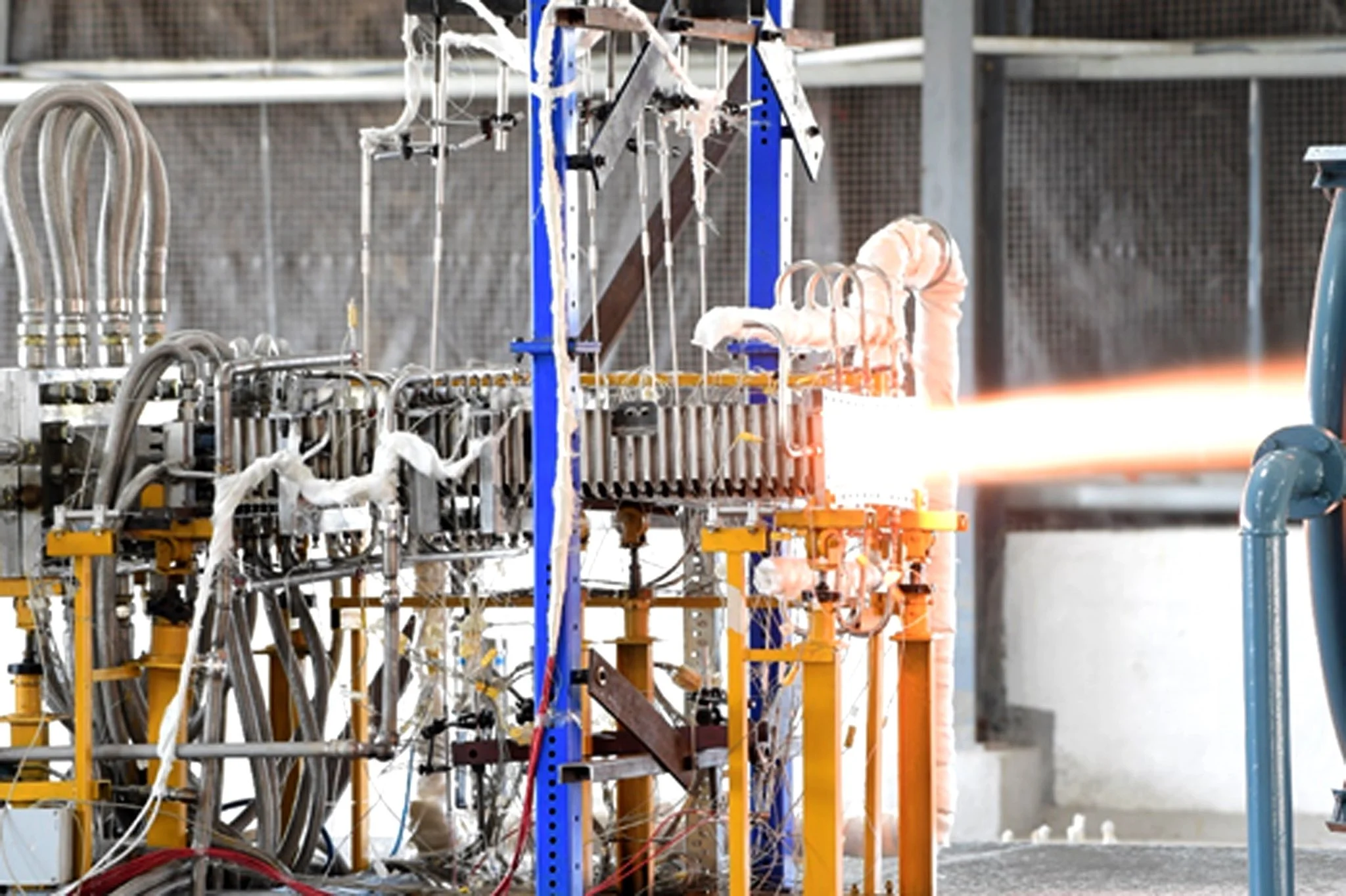
On January 9, researchers at the Defence Research and Development Organisation pulled off what officials are calling a "path-breaking milestone" at their Hyderabad facility. The full-scale scramjet combustor kept firing continuously for over 12 minutes at the specially built Scramjet Connect Pipe Test facility, which is run by the Defence Research & Development Laboratory.
This isn't just another test. It proves that both the advanced engine design and the testing infrastructure India's built actually work as intended. More importantly, it validates that India can sustain hypersonic combustion for operationally relevant durations something only a few nations have achieved.
Defence Minister Rajnath Singh didn't hold back in his praise, describing the achievement as laying down a "solid foundation" for India's hypersonic cruise missile programme. With this success, India's now rubbing shoulders with the US, Russia, and China in the race to develop these cutting-edge weapons.
Understanding Scramjet Technology: Why This Actually Matters
Here's the thing about hypersonic cruise missiles they're genuinely revolutionary. We're talking about weapons that fly faster than Mach 5, which translates to over 6,100 kilometres per hour. At those speeds, tracking and shooting them down with conventional defence systems becomes incredibly difficult.
What makes scramjet engines special is how they work. Unlike regular rockets that lug around all their fuel, these engines actually breathe in atmospheric oxygen for combustion. That fundamental difference means hypersonic missiles can keep screaming along at extreme speeds for much longer periods, all while staying lighter and way more agile than their rocket-powered cousins.
The "scramjet" name comes from "supersonic combustion ramjet." Traditional ramjets slow down incoming air before combustion, but at hypersonic speeds, that's not practical. Scramjets burn fuel in supersonic airflow imagine lighting a match in a hurricane. That's the engineering challenge DRDO just mastered.
But speed's only part of the story. These missiles can hug lower altitudes than ballistic missiles while maintaining those insane velocities. That creates serious headaches for air defence systems built to handle slower threats. The unpredictable flight paths possible with hypersonic glide vehicles make interception even more challenging.
The 12-Minute Milestone: What Makes It Significant
Why all the excitement about 12 minutes? Duration matters enormously in scramjet testing. Earlier trials ran for 120 seconds (2 minutes) in January 2025 and over 1,000 seconds (roughly 17 minutes) in April 2025 using subscale models. This latest test used a full-scale combustor essentially the real deal that would power an operational missile.
Running a full-scale actively cooled scramjet for over 12 minutes demonstrates that India's solved one of the nastiest problems in hypersonic flight: thermal management. At these speeds, air friction and combustion generate temperatures exceeding 2,000 degrees Celsius. The active cooling system proved it can handle that brutal environment for operationally relevant durations.
This also validates the Scramjet Connect Pipe Test facility itself a sophisticated ground testing infrastructure that simulates actual flight conditions without needing expensive flight tests for every iteration.
How India Stacks Up: Global Hypersonic Competition
India's achievement puts the country in an exclusive club, but where does it stand compared to established hypersonic powers?
| Country | Development Status | Target Speed | Estimated Range | Key Systems |
|---|---|---|---|---|
| India | Advanced Testing | Mach 6-8 | 1,500+ km | Project Vishnu, Dhwani |
| China | Operational | Mach 5 - 10 | 2,000+ km | DF-ZF, DF-17 |
| USA | Advanced Testing | Mach 8+ | Variable | ARRW, HACM, LRHW |
| Russia | Operational | Mach 9+ | 2,000+ km | Avangard, Kinzhal, Zircon |
The table tells an interesting story. While China and Russia have fielded operational systems, their technology paths differ from India's air-breathing scramjet approach. The US focuses heavily on boost-glide vehicles alongside scramjet research. India's concentrating on sustained scramjet-powered cruise potentially offering different tactical advantages.
The Journey So Far: Building Momentum
This latest test didn't come out of nowhere. Back in April 2025, scientists ran a smaller version of the same engine for over 1,000 seconds. That trial itself followed a 120-second test in January 2025, showing how DRDO's been methodically working through the challenges.
What's particularly noteworthy is that Indian scientists at DRDL designed and developed both the combustor and the test facility entirely in-house. Industry partners helped with the fabrication and building the complex systems, but this is fundamentally homegrown technology. It's part of India's broader push to achieve self-reliance in critical defence capabilities what the government calls "Atmanirbhar Bharat" in the defense sector.
The progression from 2-minute to 17-minute to now 12-minute full-scale tests shows a deliberate, risk-managed development approach. Each test validated specific subsystems before scaling up to the complete operational configuration.
India's Hypersonic Arsenal: What's Being Developed
DRDO's got several hypersonic projects cooking, and this scramjet test feeds directly into at least two major programs.
Project Vishnu represents India's most ambitious hypersonic effort the Extended Trajectory Long Duration Hypersonic Cruise Missile. The system aims to hit Mach 8 speeds with a range around 1,500 kilometres. The successful scramjet test directly validates the propulsion technology for this platform.
Then there's the Dhwani hypersonic glide vehicle, designed to perform unpredictable maneuvers that would make interception even harder. Unlike cruise missiles that follow relatively predictable flight paths, glide vehicles can adjust their trajectory mid-flight, complicating defensive calculations.
Both systems leverage the scramjet technology demonstrated in this test, though they may use it differently. The cruise missile needs sustained propulsion throughout flight, while the glide vehicle might use scramjet boost to achieve hypersonic velocity before gliding to target.
What's Driving This Push: Strategic Imperatives
The timing here isn't coincidental. India's navigating a pretty complex security situation ongoing border tensions with China (which has been aggressively advancing its own hypersonic capabilities) and the perpetual nuclear-armed standoff with Pakistan.
China's deployment of the DF-ZF hypersonic glide vehicle and DF-17 medium-range ballistic missile with a hypersonic warhead changed the strategic calculus across Asia. These systems threaten to overcome existing missile defenses, creating what strategists call an "anti-access/area denial" capability. India needs comparable technology to maintain strategic balance.
Military strategists increasingly view hypersonic weapons as must-have elements of modern arsenals. The combination of blistering speed, maneuverability, and the sheer difficulty of countering them makes these weapons valuable for both deterrence and potential offensive use.
There's a civilian angle too, though it's further down the road. Scramjet technology could eventually make satellite launches more efficient through air-breathing rocket engines. It might even contribute to developing hypersonic passenger aircraft someday, slashing intercontinental flight times to under 2 hours. But those applications remain pretty distant prospects for now.
Beyond Military Applications: The Broader Impact
India's indigenous development of hypersonic technology carries implications beyond weapons systems. The thermal management expertise, advanced materials science, and computational fluid dynamics capabilities developed for scramjet engines have potential spin-offs in aerospace, power generation, and materials engineering.
The program also demonstrates India's growing technological sophistication. Sustained hypersonic combustion requires mastering challenges that defeated many nations' initial attempts. Success here signals capability in fundamental science and engineering that extends beyond defense.
Also Read: Greenland–US Conflict 2026: Sovereignty, Strategy, and Arctic Tensions Explained
Economically, developing these technologies domestically rather than importing reduces foreign exchange outflows while building domestic industrial capabilities. The industry partnerships involved in fabricating test systems create technology transfer opportunities and skilled employment.
What Comes Next: The Road to Deployment
Ground tests are one thing. Operational weapons are another beast entirely. This validated engine design still needs to transition into flight-worthy systems capable of handling the brutal conditions of actual hypersonic flight.
The next logical steps involve captive flight tests mounting the scramjet on an existing aircraft or missile to validate performance in actual atmospheric conditions. After that come powered flight tests where the scramjet must demonstrate sustained hypersonic cruise independently.
Integration challenges loom large. The engine needs to mate with airframe, guidance, and warhead systems into a functional weapon. Each subsystem must work reliably under extreme thermal and aerodynamic loads.
Timeline to deployment? Conservative estimates suggest 3-5 years before seeing operational systems, though DRDO hasn't published official schedules. The gap between demonstrating technology and fielding reliable weapons typically takes years of additional development and testing.
Dr Samir V Kamat, who chairs DRDO and serves as Secretary of the Department of Defence Research and Development, congratulated the teams for what he called a "commendable achievement." His statement emphasized this as a foundation rather than a finish line.
Frequently Asked Questions
What exactly is a scramjet engine? A scramjet (supersonic combustion ramjet) is an air-breathing engine that burns fuel in supersonic airflow. Unlike rocket engines that carry oxidizer, scramjets use atmospheric oxygen, making them lighter and enabling sustained hypersonic flight. The challenge is maintaining stable combustion when air rushes through at several times the speed of sound.
How fast is Mach 5, really? Mach 5 equals roughly 6,125 kilometers per hour or 1,701 meters per second at sea level. That's fast enough to cross India about 3,000 kilometers in under 30 minutes. For comparison, commercial airliners cruise around Mach 0.85 (about 900 km/h).
When will India have operational hypersonic missiles? While DRDO hasn't announced specific timelines, experts estimate 3-5 years before operational deployment. The technology's proven, but integrating it into reliable weapon systems requires extensive flight testing and validation processes that can't be rushed.
How does India's program compare to China's? China's ahead in deployment, having fielded operational hypersonic systems like the DF-ZF. However, India's focusing on air-breathing scramjet technology while China emphasizes boost-glide vehicles. These represent different technical approaches with distinct advantages scramjets offer sustained powered flight, while glide vehicles provide unpredictable trajectories.
Why is this strategically important for India? Hypersonic weapons fundamentally change military calculations. Their speed and maneuverability make them extremely difficult to intercept, potentially overcoming existing missile defenses. For India, facing adversaries with advanced missile programs, possessing comparable capabilities maintains strategic balance and deterrence credibility.
What makes the 12-minute duration significant? Operational hypersonic cruise missiles need sustained propulsion to reach distant targets. Twelve minutes of stable combustion demonstrates the engine can function for mission-relevant durations. It also proves the active cooling system works reliably, solving one of hypersonic flight's biggest technical challenges.
The Bottom Line: What This Achievement Represents
This successful test shows that India's got the fundamental propulsion technology needed for hypersonic cruise missiles figured out. That said, going from lab success to actually fielding operational weapons? That typically takes years of additional development and testing. The gap between "it works in controlled conditions" and "it works reliably in combat" is substantial.
Still, there's no denying what this represents India's demonstrated some serious technological chops in aerospace and defense systems. The question now isn't whether they can do it, but how quickly they can turn this breakthrough into battlefield-ready capabilities.
The test validates not just an engine, but an entire development approach. Indigenous design, domestic testing infrastructure, and methodical progression through increasingly challenging milestones this is how technology programs succeed. India's now demonstrated it can play in the hypersonic big leagues.
For the broader Indo-Pacific region, this shifts strategic calculations. Hypersonic capabilities add a new dimension to India's deterrence posture and complicate adversaries' defensive planning. The technology won't change regional power dynamics overnight, but it represents another step in India's evolution as a major technological and military power.